
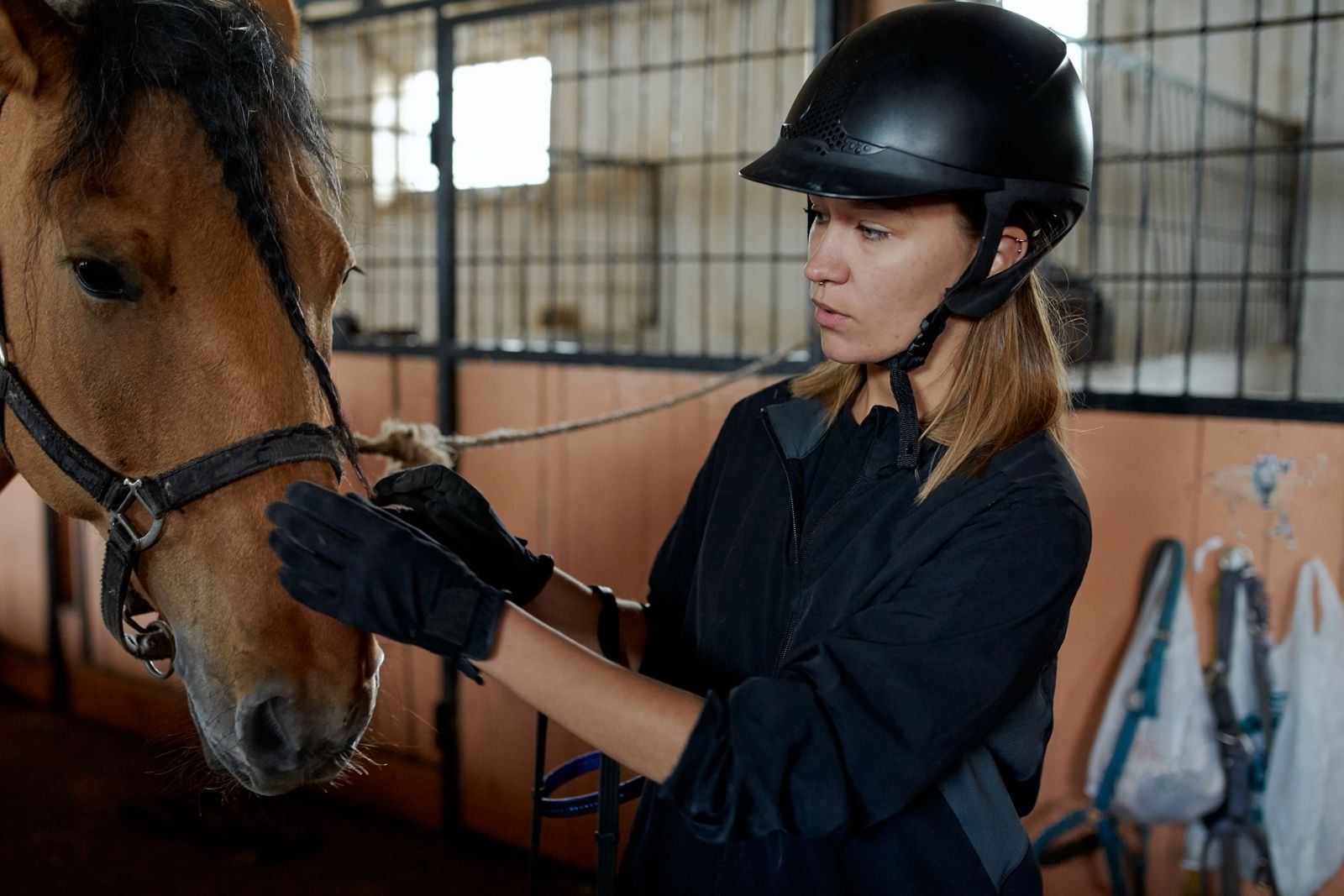
A week at the yard
If you have just started seeing someone who keeps a horse, the first thing to understand is that the horse does not take days off. Neither, in most cases, does its owner.
A typical week for an owner on DIY livery in the UK might look something like this. Every morning, before work, they drive to the yard to check the horse, change rugs, feed, turn out and muck out. In the evening they return to bring the horse in, feed again, fill hay nets and water buckets, and ride if there is light or a floodlit arena. Weekends hold longer rides, lessons, competitions or jobs that have piled up: poo-picking the field, mending fencing, cleaning tack.
Owners on part or full livery have more flexibility, because the yard handles some or all of the daily care. They still visit often, ride most days and keep a close eye on their horse's health. Sharers and loaners usually have set days when the horse is their responsibility.
None of this means your new partner has no time for you. It means their time has a shape, and the sooner you learn that shape, the easier everything becomes.
Livery types and what they mean for your diary
Understanding livery helps you understand your partner's schedule.
DIY livery. The owner rents a stable and grazing and does all the work. This is the most demanding on time, often twice a day, every day. Many DIY owners share duties with yard friends, taking turns on mornings or evenings.
Part livery. The yard does some of the work, perhaps turnout and bringing in, while the owner handles the rest. Arrangements vary widely.
Full livery. The yard does everything except, usually, riding. The owner can visit when convenient. This costs more but hands back a great deal of time.
Grass livery. The horse lives out in a field year round, sometimes with a field shelter. Checks are still needed daily, but there is no mucking out.
At home. Some owners keep horses on their own land. That means no yard politics, but also full responsibility for everything, every day.
Ask your partner about their arrangement. It tells you a lot about when they will be available and how much help might be appreciated.
Competition and show weekends
If your partner competes, the season can dominate the calendar. In the UK, eventing generally runs from spring into autumn, showing and showjumping peak through the summer, dressage runs year round with indoor winter leagues, and hunting typically runs through the autumn and winter months.
A competition day often starts before dawn: plaiting, loading, driving, walking the course, warming up, competing, cooling off and driving home. It can be exhausting and exhilarating in equal measure. Results matter, but so does the horse's wellbeing, and a good day can mean a clear round or simply a calm horse in a new place.
Going along is a lovely way to share your partner's world, but it is not compulsory. If you do go, useful jobs include holding the horse, carrying kit, minding the lorry and providing snacks. Learn when to talk and when to stay quiet; the minutes before a dressage test are not the time for a chat about weekend plans.
Holidays, cover and who feeds the horse
Holidays require planning. Someone has to look after the horse, and that might mean paying the yard, swapping duties with a friend or arranging a temporary move to full livery. Many horse people take shorter breaks, holiday in the UK or choose riding holidays that bring the horse world with them.
If you are planning a surprise trip, check the cover situation quietly with a yard friend first. A weekend away is far more romantic when your partner is not worrying about whether the field gate was shut.
When the horse is ill or injured
Sooner or later, the horse will be lame, colicky or recovering from an injury. These periods can be stressful. Box rest, for example, might mean weeks of extra visits, hand-walking and anxious waiting for the vet's next verdict. Bills can climb steeply.
The best support at these times is practical and patient. Offer a lift, bring dinner to the yard, listen without trying to fix it. Your partner may be short-tempered or distracted. It will pass.
Should you learn to ride?
You do not have to. Many partners of riders never sit on a horse and are perfectly happy. Some take a few lessons out of curiosity and find a new passion. Others learn just enough to lead a horse safely and help at the yard.
If you would like to try, book lessons at a reputable riding school rather than climbing on your partner's horse. A schoolmaster pony and a qualified instructor are a much safer start than a fizzy competition horse.
Making time that is just for you two
The trick to dating an equestrian is to build your shared time around the fixed points, not against them.
- Plan dates for the hours after evening stables, or the middle of the day at weekends.
- Combine the two: a hack followed by a pub lunch, or a raceday together.
- Keep one regular slot that belongs to the relationship, even if it is only Sunday dinner.
- Talk about the coming week each Sunday so neither of you is caught out by a show or a farrier visit.
Most of all, remember that your partner chose to make room for you in a busy life. That is a compliment.
Money talk without awkwardness
Horses are expensive, and sooner or later the subject will come up. Livery, shoeing, feed, insurance, lessons and entries add up, and a rider may make choices that look odd to someone outside the horse world, such as skipping a weekend away to pay for a saddle fit. It helps to talk about this early and calmly. Ask how they budget for the horse, not to judge, but to understand. Many riders are careful planners precisely because they have to be.
If the relationship gets serious, conversations about shared costs become important. Most couples find that the horse remains the rider's responsibility, while shared plans such as holidays are worked out together. There is no single right answer, but there should be an honest one.
Meeting an equestrian
If you would like to date someone from the horse world, a horse-first dating site puts you among people who already live this way. Read our profile tips before you start, and see our date ideas for inspiration. Once you feel ready to share your diary with someone, Signup Here.